


13 Things That *Actually* Keep Kids Busy Outdoors for Hours (Without Screens)
Updated: Aug 26
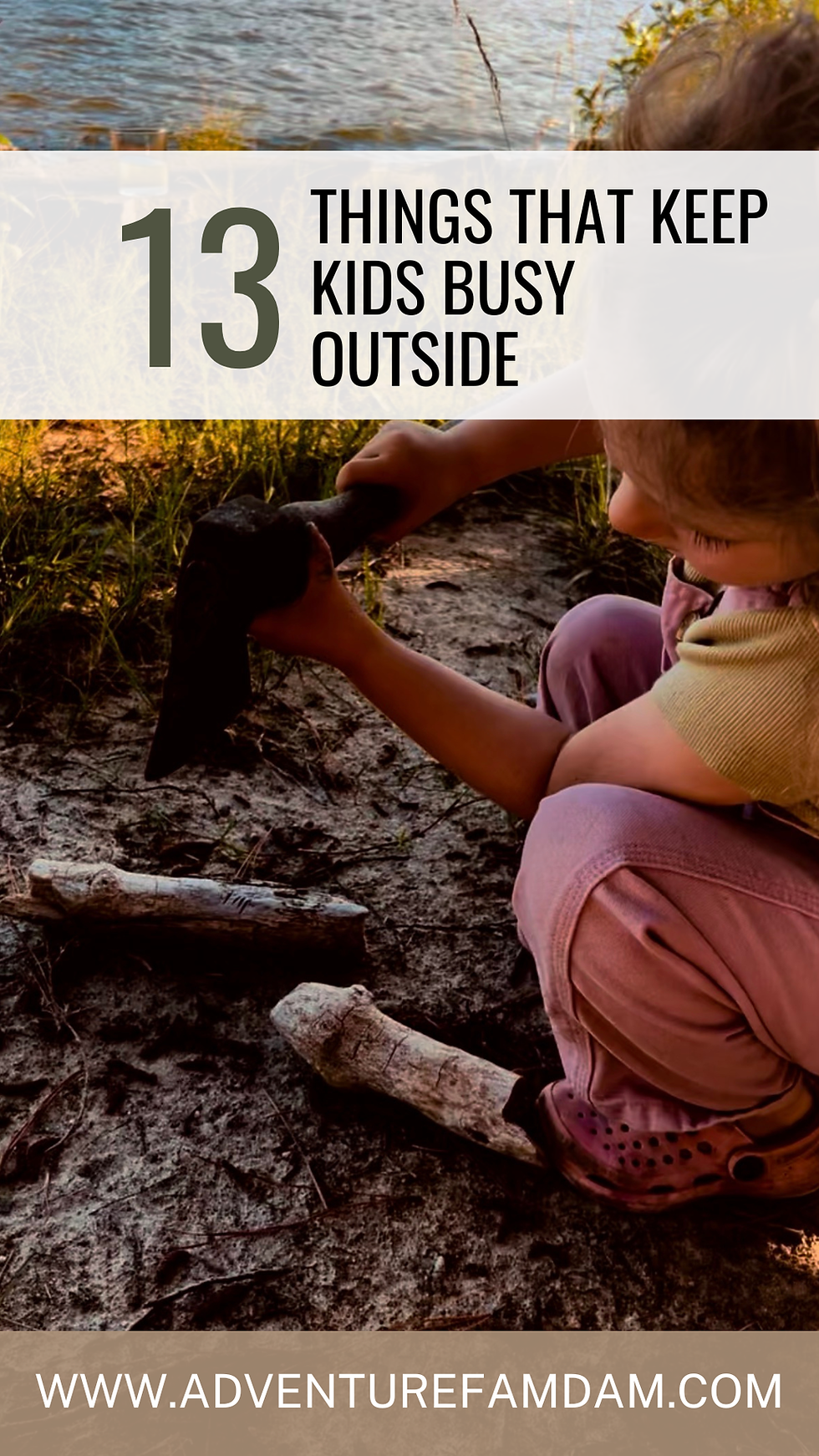
MOST of the things our daughter has played with the longest weren’t expensive toys at all.
A stick has probably logged the most hours overall.
After years of camping, creek days, hiking, beach afternoons, nature school, and living outside more often than inside, we’ve noticed something not so surprising:
Kids really do not need that much to play deeply outdoors.

In fact, the simpler the object, the longer the play usually lasts.
If you’re trying to spend more time outside as a family, reduce screen time a little, or just make camping with kids easier, these are the random, simple things that consistently keep our daughter busy for hours.
My thought process around buying outdoor toys: Buy used as often as possible, buy sturdy materials like metal and wood that will not leave trash in our earth, keep it as simple as possible!!
Table Of Contents (AKA The Top Items That Keep Our Kid Busy Outdoors):

A Really Good Stick
We’re starting with the obvious MVP. A good stick can become:
a hiking staff
fishing pole
magic wand
horse
sword
campfire poker
treasure finder
walking pet
Honestly, the imagination mileage on a stick is unmatched.
And yes, she somehow always knows which sticks are “special” and which ones are apparently garbage.
We’ve stopped fighting it. At this point we just accept that every hike ends with us transporting home at least one emotional support branch.
Metal Cups, Tiny Pitchers + Scoops
These might be the most underrated outdoor “toys” we own.
We bring a little collection of metal cups, measuring cups, tiny pitchers, scoops and bowls camping with us constantly. You can buy sets online (like this one) or you can just use whats already in your kitchen!

They get used for:
creek water transfers
potion making
sand play
washing rocks
“cooking”
filling random holes for absolutely no reason
sorting treasures
making tiny rivers
pouring water from one container into another approximately 900 times
The smaller the tools, the more focused the play seems to become.
And unlike bigger toys with one obvious purpose, these work everywhere:
Campsites. Beaches. Puddles. Forest school. Backyard dirt piles.

The Snowball Maker That Became “Forest Tongs”
This one still makes us laugh.
We originally bought one of those snowball maker toys for winter (these are also great tongs).
But somehow it became a year-round outdoor tool.

Now it gets used for:
picking up pinecones
moving rocks
collecting shells
grabbing slimy things she does not want to touch
“rescuing” bugs
transporting mud treasures
moving anything deemed too gross to touch with bare hands
Apparently giving a kid tiny grabber control over the natural world is incredibly entertaining.
Who knew?
This is also a good example of why we love open-ended tools over single-purpose toys, like simple tongs.

Buckets and Shovels
Simple but effective! We love a good collapsable bucket for camping trips and metal ones for home. For shovels just a simple garden trowel works great, I avoid plastic kids shovels because they always end up breaking and they don't work as well in the dirt.

Ours uses buckets for:
carrying rocks
transporting water
collecting sticks
storing treasures
making soups
building sand structures
catching minnows
moving dirt from one location to another for reasons unknown
A collapsible bucket is one of our favorite camping additions because it packs down small and somehow creates hours of entertainment anywhere there’s water, sand, mud, or gravel.
Which is basically every campsite ever.
And then there’s the shovel.
Not a flimsy toy shovel. A real-ish little shovel.
There is something deeply satisfying to kids about real tools.
Especially outdoors.

Rope, Tarps + Carabiners
This combo unlocks an unbelievable amount of creativity.
We love giving kids materials that don't have an obvious end result.
A piece of rope can become:
a pet leash
a tow rope
a boundary
a climbing aid
part of a fort
a rescue system
a boat dock
a clothesline
a “trap” for imaginary creatures
I like paracord, add a tarp and a few carabiners and suddenly you're building.
Kids love gear that feels real.
Especially when they get to figure out how to use it themselves.
Obviously, anything involving climbing, ropes, carabiners or elevated setups needs age-appropriate gear and adult supervision. But giving kids real materials to experiment with can be incredibly rewarding.
Bug Jars, Nets + Magnifying Glasses
Nothing slows kids down in the best possible way like looking closely at tiny outdoor things.
A bug jar can turn a short walk into:
an hour-long beetle investigation
a worm rescue mission
a butterfly observation station
a “scientific research lab”
an identification challenge
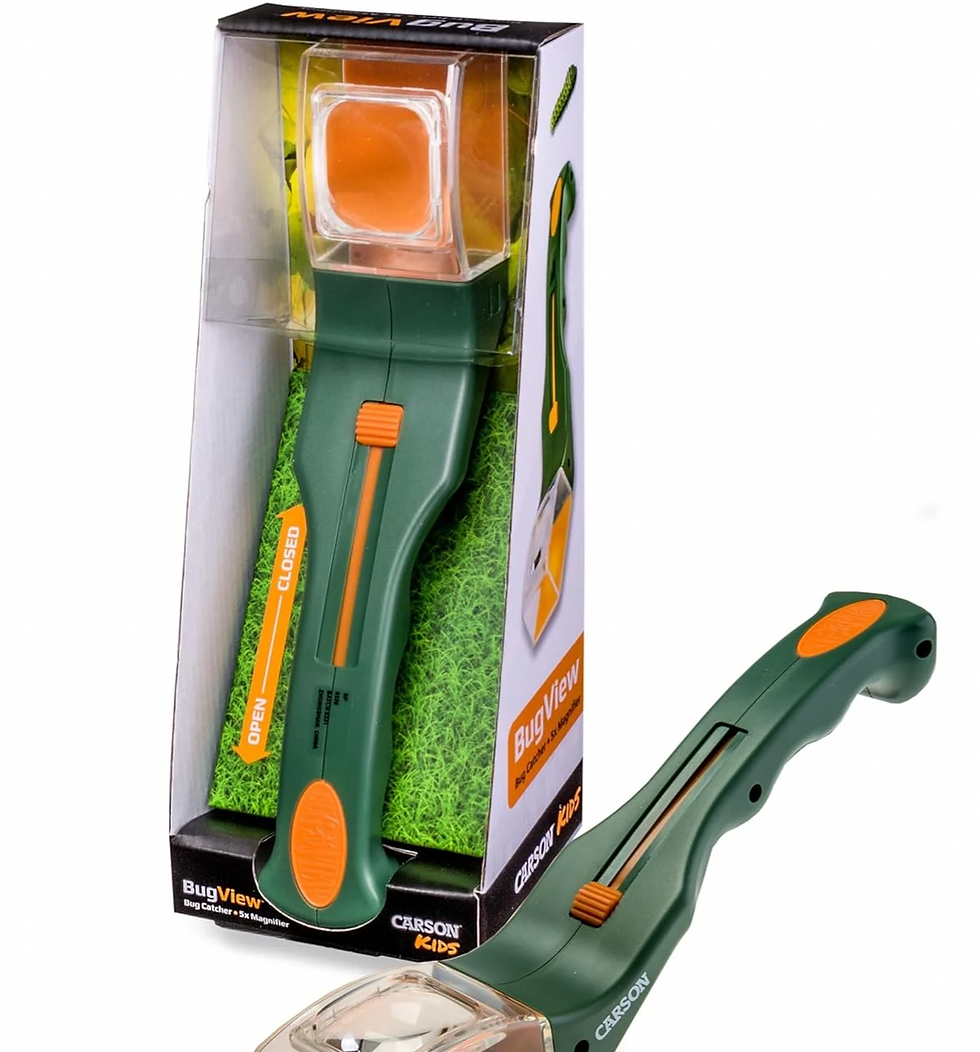
Add a magnifying glass and suddenly that tiny bug becomes an entire world.
Butterfly nets are another favorite.
And I think this is where outdoor play starts crossing over into outdoor education without feeling like school.
Kids naturally want to know:
What is that?
What does it eat?
Where does it live?
Why does it look like that?
You don't need a lesson plan.
Just give them the tools to investigate.

Flashlights + Headlamps
Camping with a flashlight automatically turns ordinary evenings into adventure mode.
That's just science.
Suddenly:
finding the bathroom is exciting
collecting firewood is a mission
looking under rocks is thrilling
raccoon spotting becomes elite entertainment
walking around camp becomes an expedition
Our daughter will spend an absurd amount of time wandering around camp after dark with a headlamp pretending to “inspect” things.
And honestly, I love that.

A headlamp gives kids a tiny bit of independence while also making nighttime outdoors feel like an adventure.
Just make sure you establish your family's boundaries around wandering away from camp before handing over the flashlight.

Binoculars + A Compass
These are two little tools that can make a normal hike feel like an expedition.
Binoculars turn:
“We're going for a walk.”
into:
“WE NEED TO FIND THAT BIRD.”
Suddenly kids are looking up.
They're scanning the trees.
They're noticing movement.
They're listening.
A compass can do the same thing.
It gives kids a reason to pay attention to direction, landmarks and where they are in the landscape.
And yes, at first they'll probably just spin around holding the compass and announce completely incorrect directions.
That's part of the fun.
You can slowly introduce actual navigation skills as they get older.

Climbing + Swinging Toys
Kids are basically little movement-seeking creatures.
Give them something they can climb, swing, balance on or hang from and you've got a pretty solid recipe for outdoor play.
Depending on the space and age of your child, this might be:
a backyard swing
a climbing dome
a slackline
a hanging rope
gymnastic rings
a climbing net
a tree swing

We love these because the play isn't just imaginative.
It's physical.
They're figuring out balance, grip, strength, coordination and body awareness without realizing they're “working on” any of those things.
Again: safety first. Use age-appropriate equipment and supervise climbing and swinging setups.
Prisms
This one is a little more unexpected.
A simple prism can turn sunlight into a full-blown science experiment.
You can make rainbows on:
rocks
trees
paper
your hands
the side of the camper
basically anything the sun touches

It becomes a tiny introduction to light, color and optics without needing a single worksheet.
And honestly?
Kids think rainbows appearing out of nowhere are magic.
I don't see any reason to ruin that.
Hand-Building Tools
One of our favorite things to encourage outdoors is making something instead of just playing with something.
Depending on age and supervision, this might mean simple hand tools for:
building
tying
sanding
assembling

This is another area where I think real tools beat plastic toy versions.
There's something different about handing a kid a real tool and saying:
“Let's figure out how to use this.”
It gives them ownership.
It also teaches patience, problem-solving and that very satisfying feeling of “I made this.”
Start small, choose age-appropriate tools and teach proper safety before turning them loose.
Pocket Field Guides
These might be one of my favorite additions to our outdoor gear.
A little pocket guide for birds, bugs, flowers, rocks, trees or animal tracks can completely change how a kid experiences a hike.

Instead of just walking past a tree:
What kind is it?
Instead of seeing a bird:
Which one is that?
Instead of finding a weird rock:
Why does it look like that?
Now the walk becomes a scavenger hunt.
And the best part is that these are tiny enough to throw in a backpack and forget about until something interesting appears.

Literally Just Water
If all else fails:add water.
A puddle. A creek. A bucket. A spray bottle. A mud patch.
That’s it.
Water play has probably created more long stretches of independent outdoor play than anything else we own.
Especially paired with random tools instead of structured toys.
Funnels, pitchers, scoops, cups, shovels, bowls, suddenly kids become fully invested in highly important water transfer operations.

What We’ve Learned About Outdoor Play
The longer we do this, the more we realize kids usually do not need constant entertainment outdoors.
They mostly need:
time
freedom
open-ended tools
permission to get messy
space to be bored long enough for imagination to kick in
The toys that last the longest are almost never the loudest or most expensive.
Usually they’re the simplest.
A stick. A bucket. A shovel. Tiny measuring cups. A weird snowball maker turned forest tongs.
And honestly? Watching the way kids naturally play outside when given the chance has been one of our favorite parts of this lifestyle.


Comments